

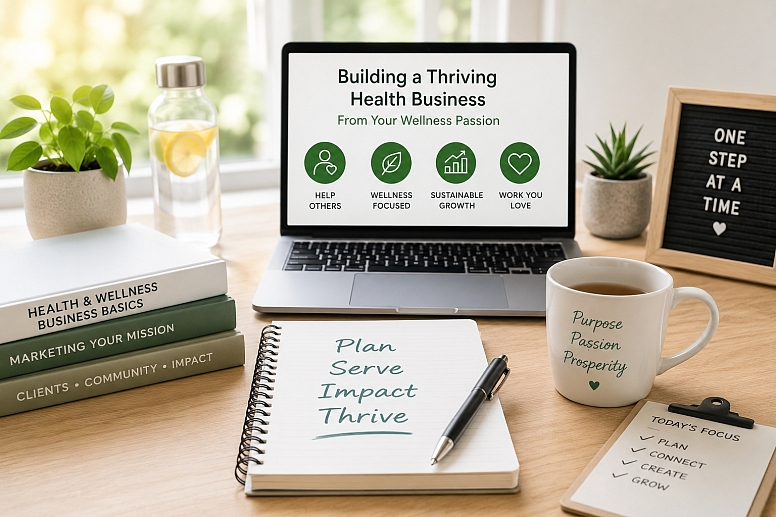
How to Build a Health Business From Your Wellness Passion
Health-focused entrepreneurs and other new business owners often start a health and wellness startup with a real mission: helping people feel better while building a sustainable career. The core tension shows up fast; starting a health business can feel like juggling service, marketing, boundaries, and credibility all at once, especially when the work is personal.
The wellness industry opportunities are real, but so are the common early mistakes that leave passionate people underpaid and exhausted. With the right clarity up front, a health-related passion really can become a steady, proud livelihood.
Make Your First 4 Decisions: Model, Credentials, Audience, Legal Basics
Before you buy equipment or build a website, make four early decisions that keep your wellness business realistic, compliant, and aligned with the “don’t burn out” boundaries you set for your time and energy.
- Pick a business model that fits your weeks (not just your dreams): Choose one primary offer and one delivery method for the next 90 days. Common business models in health include 1:1 coaching/education, small-group programs, classes/training, corporate workshops, digital products, and “done-for-you” services (like meal-prep guidance or habit tracking, where appropriate). Sanity-check it with two numbers: how many sessions you can actually run weekly, and the minimum price you need per session to make it worth it.
- Write a one-page scope statement before you market anything: In plain language, define what you do, what you don’t do, and who you recommend (example: “I teach behavior change and basic nutrition habits; I don’t diagnose, treat, or prescribe”). This protects clients and protects you, especially in health, where “helpful” can accidentally slide into regulated medical advice. Put the same scope in your intake form and on your website so your message stays consistent when you’re tired or busy.
- Confirm credentials and business licensing for your specific service (city + state): Make a checklist with three columns: required credentials, optional credibility boosters, and “not allowed without a license.” Call your state licensing board (or check its site) for anything that resembles healthcare: nutrition counseling, physical training with rehab claims, mental health support, bodywork, or testing. If you’re offering education (like CPR instruction), verify what certification you need to teach and whether you need a general business license, sales tax registration, or a home occupation permit.
- Do a tiny healthcare target market analysis, 10 conversations in 10 days: Talk to 10 people who match your likely audience (parents of young kids, older adults, shift workers, small employers, etc.). Ask three questions: “What have you tried?” “What’s still hard?” and “What would make it worth paying for help?” Then choose a single “who + outcome” statement (example: “I help new parents build a 15-minute meal routine”). This keeps your health business planning grounded in real life, not assumptions.
- Set legal basics early so you don’t get stuck later: Even small wellness businesses should separate personal and business finances, use a basic client agreement, and follow privacy expectations for any health-related information you collect. Legal diligence matters because startups collapse during fundraising when legal red flags surface. Your goal is to be clean and simple from day one. If you’re unsure, spend an hour with a small-business attorney or accountant to confirm your structure, contracts, and recordkeeping.
- Plan a “first client” path that matches your model: List three places your audience already gathers (schools, workplaces, gyms, community centers, parent groups) and draft one outreach message that offers a clear, low-risk first step (a trial class, a lunch-and-learn, or a short consult). Decide what you’ll deliver in the first session and what you’ll invite them to do next. When your model is training-based, this naturally becomes a straightforward plan for filling your first class and collecting referrals.
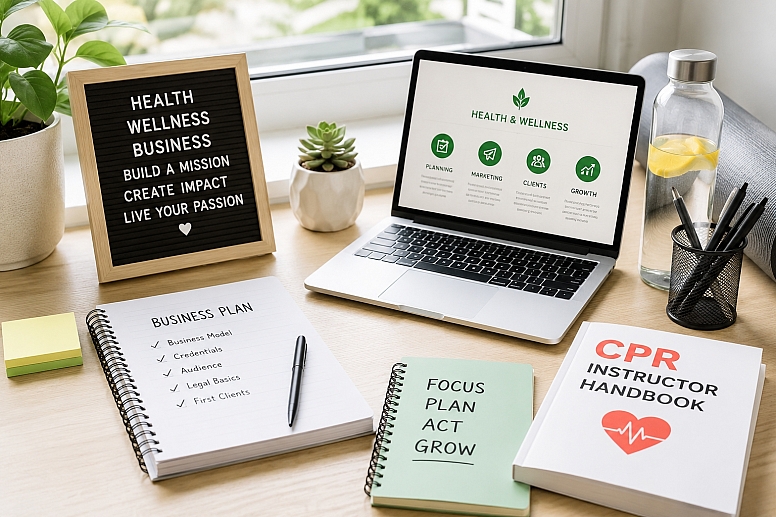
Build a CPR Training Business: Costs, Requirements, and First Clients
Once you’ve made your key startup decisions - what you’ll offer, who you’ll serve, and the basics to operate legally - CPR instruction is a clear example of how those choices can turn into real classes and real income. A CPR training business can turn a genuine passion for health into a rewarding career because you’re teaching life-saving skills that make your community safer, and you can build a steady source of income by running classes on a consistent schedule. If you’re curious about the practical side of getting set up, including typical cost categories, knowing how much to start a CPR training business can help you picture what “startup costs” really look like.
To teach CPR classes, you’ll need instructor certification from a nationally recognized organization. That instructor certification typically isn’t a single step; it’s a sequence designed to protect quality and consistency. First, you earn provider certification (so you’re certified in the skills you’ll be teaching). Next, you complete instructor training to learn how to teach and evaluate students. Finally, you go through monitored teaching, where your instruction is observed to confirm your classes meet recognized standards.
A Weekly Rhythm That Keeps Growth Moving
Your goal now is steady momentum: leads come in, classes fill up, and operations stay calm. This simple loop turns “I should market more” into a few repeatable actions you can do even on busy weeks, so your passion stays sustainable.
|
Stage |
Action |
Goal |
|
Plan |
Pick one offer, one audience, and one weekly class target |
Clear focus for the week |
|
Attract |
Post one helpful tip and one clear call to book |
Consistent health business marketing output |
|
Convert |
Reply within 24 hours and confirm with a simple intake form |
Booked students and fewer no-shows |
|
Fund |
Track cash in, cash out, and a monthly savings target |
Predictable funding options for startups |
|
Staff |
Document tasks and hire for adaptability when you delegate |
Reliable support without micromanaging |
|
Systemize |
Use one calendar, one CRM list, and one checklist |
Fewer dropped balls as you scale |
Each stage feeds the next: planning clarifies what to promote, promotion creates conversations, and fast follow-up turns interest into revenue. Tracking money, people, and tools closes the loop so you can adjust the plan without starting over.
Questions New Wellness Business Owners Ask Most
Q: What licenses or certifications do I actually need to start?
A: It depends on what you do and what you claim. Start by writing down your exact services, whether you touch clients, and whether you’re diagnosing or treating anything. Then check your local business license rules and your profession’s board requirements, and use clear disclaimers if you’re offering education rather than medical care.
Q: How do I market without feeling salesy or posting every day?
A: Teach one small thing your audience can try this week, then invite them to book the next step. A steady content habit works best when you focus on trust, not pressure, and the brand being perceived is a real signal that you are building momentum.
Q: Can I fund this without investors or a huge savings cushion?
A: Yes. Start with a simple paid offer and build from pre-booked sessions, small packages, or a short pilot program. Treat cash flow management like a weekly practice so expenses never surprise you.
Q: What should I do when clients message at all hours?
A: Set office hours and a response window in writing, then use an auto-reply that tells people what to expect. You can still be caring while protecting your energy, and consistency helps clients feel safe.
Q: When is it time to hire help, and what should I delegate first?
A: Hire when admin tasks start stealing time from service delivery or follow-up. Delegate scheduling, billing, and basic client onboarding first, and keep a short checklist so quality stays consistent.
Build a Sustainable Health Business: One Small Proof Point
Starting a wellness business can feel like holding two truths at once: real passion to help people, and real uncertainty about money, rules, and getting clients.
The steady path is a business success mindset that favors clarity over chaos, validates what people will buy, keeps decisions simple, and takes the steps to launch a health-related business without rushing ahead of the basics. Do that, and questions turn into plans, early wins create traction, and motivating health entrepreneurs learn to trust their own practical business advice. Small proof beats big promises, every time.
Recent Posts







0.0678