

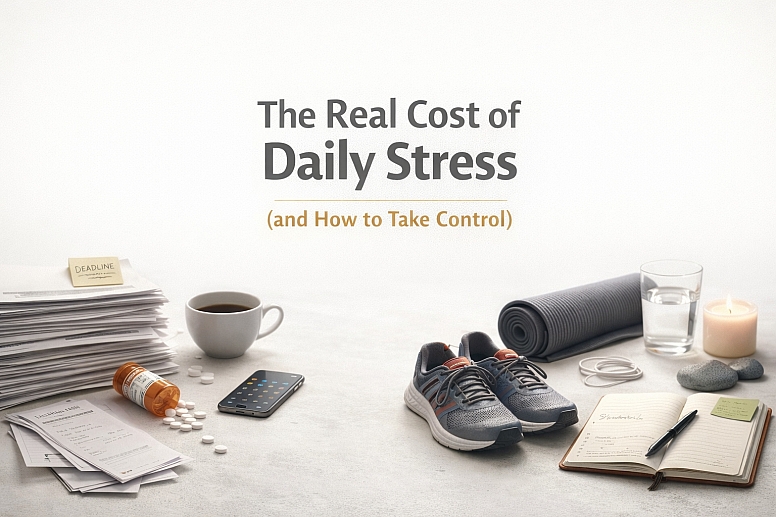
The Real Cost of Daily Stress (and How to Take Control)
Stress is a common human experience that affects mental health, physical well-being, and daily decision-making. Whether it stems from work, family responsibilities, finances, or simply trying to keep up with modern life, stress can quietly accumulate until it begins to shape how you feel and function.
The good news is that managing stress doesn’t require a complete lifestyle overhaul. Small, intentional changes can make a meaningful difference.
A Quick Snapshot Before We Dive In
Every day stress tends to follow a pattern: pressure builds → coping habits kick in → outcomes improve or worsen. The strategies below aim to interrupt that cycle early. By recognizing stress signals, choosing healthier responses, and adjusting your environment, you can reduce the long-term toll stress takes on your body and mind.
Understanding What Stress Looks Like (It’s Not Just Anxiety)
Stress isn’t always dramatic. Sometimes it’s subtle: constant fatigue, irritability, trouble sleeping, or feeling mentally “foggy.” For others, it shows up physically—tight shoulders, headaches, digestive issues. Naming stress for what it is matters because unnamed stress often goes unmanaged.
A helpful way to think about stress is as a signal, not a failure. It’s your system saying, “Something needs attention.”
When Work Is the Main Source of Stress
Job-related stress is one of the most persistent forms of everyday pressure. Long hours, emotional labor, lack of growth, or misalignment with values can slowly drain motivation and well-being. In some cases, stress management techniques help—but the real issue is the role itself.
For people who feel stuck or burned out, a career change can be a powerful form of stress reduction. Returning to school online is one option that allows flexibility while building new skills. For example, those interested in improving health outcomes in their communities while advancing professionally may choose to pursue an online nursing degree (available here), which can open doors to more meaningful and stable work.
The key point: managing stress sometimes means changing the environment, not just coping within it.
Everyday Stressors and Smarter Responses
Here’s a simple table that maps common stress triggers to practical responses you can try right away:
|
Common Stressor |
Typical Reaction |
Healthier Alternative |
|
Tight deadlines |
Panic or procrastination |
Break tasks into 20–30 min blocks |
|
Constant notifications |
Mental overload |
Schedule phone-free time |
|
Lack of control |
Rumination |
Focus on one controllable action |
|
Poor sleep |
More caffeine |
|
|
Work overload |
Skipping breaks |
Short, intentional pauses |
Small swaps like these don’t eliminate stress entirely, but they reduce its intensity and duration.
Habits That Quiet Stress Over Time

Some stress relief methods work in the moment; others work cumulatively. The following habits are proven to support long-term resilience:
- Consistent sleep routines, even on weekends
- Light-to-moderate physical activity, such as walking or stretching
- Regular meals to stabilize energy and mood
- Brief mindfulness practices, like focused breathing
- Social connection, even low-effort check-ins
Notice that none of these require perfection. Consistency beats intensity.
A Simple How-To: Your Personal Stress Reset
Use this checklist as a repeatable process when stress spikes.
- Pause and name what you’re feeling (tired, overwhelmed, tense).
- Identify the stressor you can influence right now.
- Take one regulating action (walk, breathe, hydrate).
- Reduce input (noise, screens, multitasking).
- Re-enter the task with a smaller goal.
FAQ: Common Questions About Stress Management
Is all stress bad?
No. Short-term stress can improve focus and performance. Problems arise when stress is constant and unmanaged.
How long does it take for stress strategies to work?
Some techniques (like breathing) work immediately. Others, such as sleep routines, show benefits over weeks.
What if stress feels overwhelming?
If stress interferes with daily functioning, relationships, or health, professional support from a therapist or healthcare provider can be very helpful.
Managing stress in everyday life is less about eliminating pressure and more about responding to it differently. Awareness, small habit changes, and honest evaluation of major stress sources all matter. Over time, these adjustments add up to better energy, clearer thinking, and improved well-being. Stress may be inevitable—but suffering doesn’t have to be.
LEAVE A COMMENT
Categories
Recent Posts







0.0617