
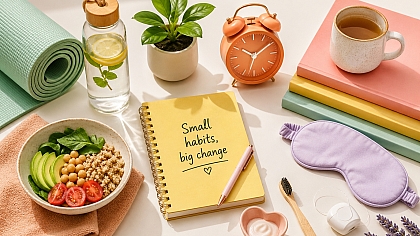
Everyday Upgrades: Self-Improvement Strategies for Optimal Wellness
Optimal wellness is your ability to feel reasonably energized, emotionally steady, and socially connected most days. It isn’t perfection; it’s recovery—how quickly you bounce back after stress, poor sleep, or a hectic week. Self-improvement helps because it turns “I want to feel better” into small behaviors you can repeat.
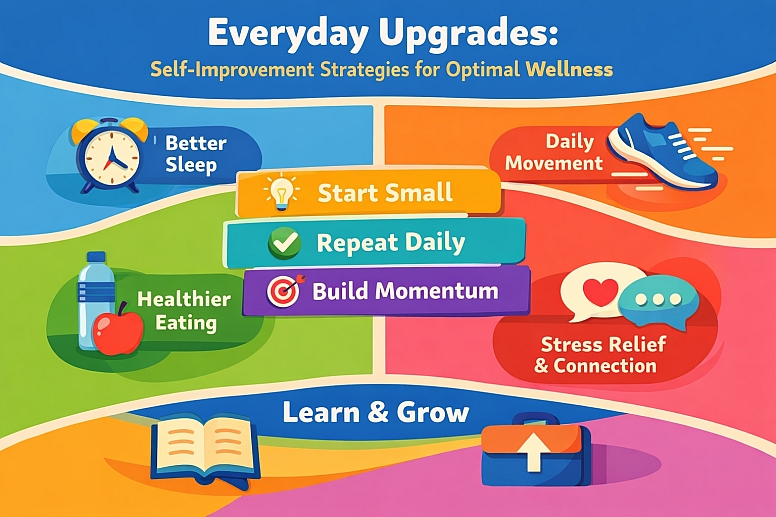
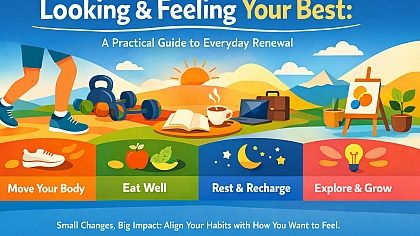
The Quick Version: In brief, the idea is to lock in one basic (sleep, movement, food, or stress recovery), protect it with a little planning, then build meaning through relationships and learning. Start tiny. Repeat. Adjust.
A Simple Baseline Guide
|
Area |
What It Influences |
One Small Move Today |
|
Mood, Focus, Recovery |
Set a consistent wake time for 7 days |
|
|
Movement |
Energy, Stress, Strength |
Take a 10–15 minute brisk walk |
|
Food & Hydration |
Hunger Swings, Stamina |
Add one protein + fiber item |
|
Stress Skills |
Overwhelm, Burnout |
60 Seconds of Slow Breathing Before a Task |
|
Connection |
Resilience, Joy |
One Genuine Check-In with Someone |
Career Growth as Wellness Leverage
Sometimes wellbeing improves fastest when you change the context you spend most hours in: your job. Switching roles or paths can re-energise personal growth by aligning work with your values, opening new learning curves, and restoring a sense of progress when stagnation starts to drain motivation. If you’re exploring a pivot as part of your self-improvement plan, you should explore this for some ideas and inspiration.
Four Strategies That Punch Above Their Weight
- Shrink the Goal: “Walk after lunch” beats “Get Fit.”
- Reduce Decisions: Make 1–2 Meals Automatic on Weekdays.
- Practice Recovery: Build Tiny Pauses (Two Breaths, Short Stretch) into Transitions.
- Design Your Environment: Put Healthy Defaults Where Your Hands Already Go.
Movement Targets (No Intimidation)
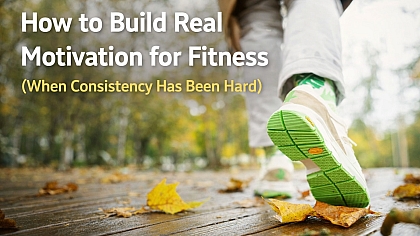
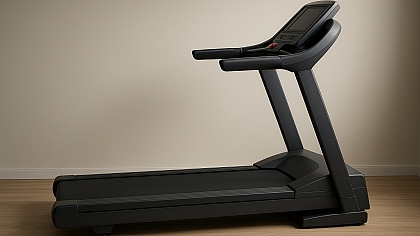
A widely used U.S. guideline suggests adults aim for about 150 minutes of moderate-intensity activity per week (or 75 minutes vigorous, or a mix), plus muscle-strengthening activity on 2 days per week. Short sessions add up. If that sounds big, start with “Most Days, 10 Minutes.” The goal is consistency first, intensity later.
One Resource Worth Bookmarking
The CDC maintains a clear, practical page on adult activity recommendations and how to start. It’s useful when you’re tempted to chase extremes or when you’re stuck in ambiguity about what counts. The page also reinforces a helpful idea: If you can’t meet the full recommendation right now, being active “as you can” is still worthwhile. Use it as a baseline, then tailor it to your schedule and abilities.
FAQ
What’s the Fastest Change That Helps Most People?
A consistent wake time plus a short daily walk is a strong starter combo.
What If I Keep Falling Off?
Plan for lapses. Drop to the minimum win for two days, restart, and learn what was unrealistic.
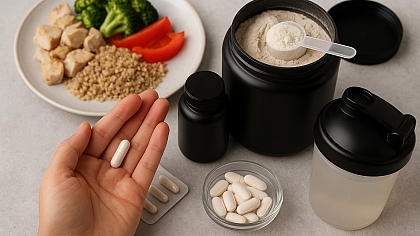
Do I Need Supplements or a Strict Diet?
Most people get more impact from sleep, movement, and a consistent food pattern. For medical needs, ask a qualified clinician.
How Do Relationships Fit In?
Supportive connection buffers stress and makes habits stick—especially during busy seasons.
Wellness is a system, not a personality trait. Start with one keystone habit, make it easy, and track it for two weeks. Add structure that reduces decisions and increases recovery. Over time, those small upgrades become your baseline.
LEAVE A COMMENT
Categories
Recent Posts


0.0571