
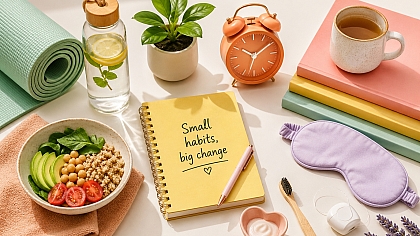

How to Feel Your Best Every Day: Small Shifts, Big Impact
Life can pull us in a dozen directions at once, leaving little room to recharge. Yet, well-being isn’t built on radical overhauls — it’s the quiet consistency of simple choices, stacked daily, that keep mind and body in sync. This article explores small, practical strategies for feeling your best — physically, mentally, and emotionally — every day.
Quick Summary
You’ll find practical guidance on:
- Restoring balance and motivation
- Simple, research-backed habits for better mood and focus
- Short-term and long-term well-being strategies
- Career growth and purpose renewal
- A checklist to keep daily progress visible
Morning Momentum
How you start your day often determines how you end it. Rather than hitting the ground sprinting, consider anchoring your morning with a few predictable rituals. Structure provides clarity and calm before decision fatigue sets in.
Try this short structure:
- Hydrate early: Two glasses of water before caffeine.
- Move lightly: A short stretch or walk to activate your body.
- Set a “first focus”: Choose one main task for the day, not three.
This simple rhythm limits mental clutter and builds momentum for the rest of the day.
The Science of Rest and Micro-Recovery
Most people think of rest as the absence of work. In truth, rest is a performance strategy — it restores cognitive function, prevents burnout, and stabilises emotions.
Here are four types of rest worth practising daily:
- Physical Rest – Take short walks, stretch, or nap to reduce muscle tension and restore circulation.
- Mental Rest – Step away from screens, journal, or focus on one task at a time to clear mental clutter.
- Social Rest – Disconnect from constant messages and notifications to regain emotional space.
- Creative Rest – Spend time in nature, read something inspiring, or enjoy music to refresh your perspective.
Don’t wait for weekends to rest. Schedule brief “micro-pauses” — two to three minutes between tasks — to let your brain reset before you switch gears.
When Fulfilment Fades
Feeling “off” isn’t always about fatigue — sometimes it’s about misalignment. If your work feels unfulfilling, that tension is information, not failure. It may be time to explore new possibilities rather than push through the same cycle.
Changing careers doesn’t have to mean starting from zero. Online degree programs make it possible to continue learning while still working or caring for family. Understanding the importance of a business degree can help you develop practical skills in accounting, communication, or management — knowledge that opens new professional doors and confidence in navigating them.
A new learning path often rekindles purpose — one of the strongest contributors to everyday well-being.
Nourishment Beyond Food
Good nutrition fuels well-being, but what we consume mentally matters just as much. Information intake shapes stress, focus, and emotional stability.
Ideas to apply right away:
- Keep your news intake brief and balanced.
- Follow voices that inform or inspire, not agitate.
- Balance screen time with sensory grounding — listen, smell, touch, breathe.

Protecting your mental inputs is as vital as protecting your diet.
The Joy List
You can’t optimise what you don’t observe. Create a Joy List — a living document of activities, people, or places that genuinely restore your energy.
Examples include:
- Walking without headphones
- Cooking with friends
- Volunteering for a cause
- Finishing small creative projects
Review the list weekly. Patterns emerge: activities that energise you reconnect you with purpose; those that drain you reveal boundaries that need attention.
How to Build a Daily Well-Being Routine
The best well-being system is one you can sustain. Start with this simple checklist and adapt it as life shifts.
Daily Well-Being Checklist
☐ Drink water before coffee
☐ Move for at least ten minutes
☐ Step outside for natural light
☐ Eat one colourful, whole-food meal
☐ Pause for two minutes between tasks
☐ Speak with one uplifting person
☐ Write one line of gratitude before bed
Consistency matters more than perfection. Skipping a day doesn’t erase progress — it’s part of the process.
Common Questions
How can I stay motivated to maintain these habits?
Motivation follows action, not the other way around. Start small; progress itself becomes energising.
Do I need special online tools or apps?
No — keep it simple. Reduce friction, not add layers of management.
What if I fall off track?
Treat missed days as data, not defeat. Review what triggered the lapse and design a smaller, easier version of the habit.
Short vs Long-Term Habits
|
Goal |
Short-Term Habit |
Long-Term Payoff |
|
Energy |
Stand up hourly |
Better posture and alertness |
|
Mindset |
Reduced stress baseline |
|
|
Focus |
Silence your phone for 30 minutes |
Stronger concentration |
|
Growth |
Read ten pages daily |
Broader curiosity and resilience |
Feeling your best isn’t about radical transformation — it’s about refining how you move through each day. The smallest habits compound into powerful change when built consistently. Every glass of water, deep breath, or quiet “no” protects your energy and restores your balance.
Start where you are. Keep what works. Let the rest fall away — and you’ll find well-being showing up naturally, one choice at a time.
LEAVE A COMMENT
Categories
Recent Posts




0.0838